

Hating a film can be just as engaging and possibly more entertaining than loving it. A movie that is notably foolish, poorly conceived, or morally questionable can spark as much intellectual debate as one that is genuinely impactful. In both scenarios, there is something worth discussing.
This sentiment is what makes encountering a film like “The Social Reckoning” so disheartening. The sequel to “The Social Network,” a 2010 film that told the captivating story of Facebook’s origins, written by Aaron Sorkin and directed by David Fincher, “The Social Reckoning” falls into the category of regrettable anti-art creations.
The movie is so devoid of substance and originality that it fails to evoke genuine hatred, despite attempting to portray itself as profoundly relevant. It is such a dull and uninspiring work that it lacks the depth or perspective to engage with, let alone despise constructively.
Focusing on the issues of social media and corporate-controlled conformity, the film could serve as a reflection of the very problem it seeks to criticize: the abundance of low-quality, uninteresting “content” saturating our online platforms.
Despite boasting a cast and crew comprising some of the industry’s most intriguing talents, “The Social Reckoning” falls short in its execution. The storyline follows Facebook’s expansion phase and aims to critique one of the prominent tech giants. However, the film’s attempt to deliver a profound and timely message falls flat.
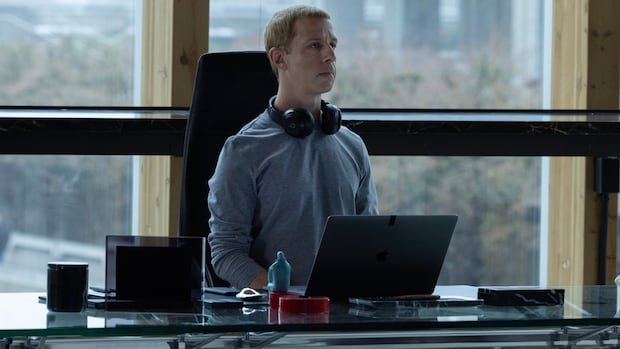
The narrative revolves around a struggling journalist and a disillusioned Facebook employee uncovering a pattern of misconduct within the company, leading to societal upheaval. Mark Zuckerberg, portrayed as a villain on a downward spiral, adds little to the plot beyond his symbolic significance.
The portrayal of Zuckerberg lacks depth and fails to capture the complexities seen in previous depictions. The character comes across as uninspired and inconsequential, a far cry from the intricate portrayal that made the original film compelling.
Overall, “The Social Reckoning” presents a mundane and cliché narrative, relying on worn-out tropes and failing to offer any substantial insights. The film’s shortcomings can be attributed to Sorkin’s direction, as it lacks the nuance and depth needed to engage viewers effectively.
In conclusion, “The Social Reckoning” disappoints with its lack of originality and courage, presenting a bland and uninspired take on its relevant subject matter. The film’s failure to take risks or convey a clear message ultimately undermines its impact and leaves audiences wanting for more.