
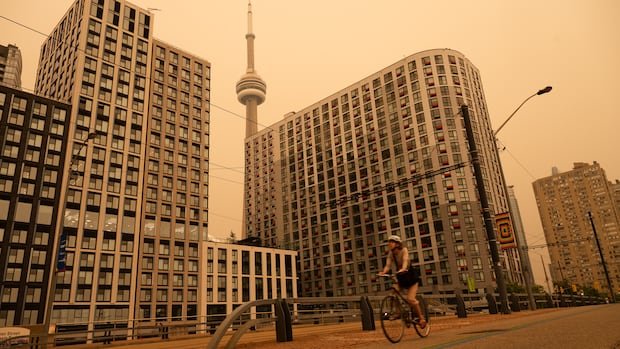

Canadians are facing the prospect of a 5-degree Celsius temperature increase in the future, as outlined in a recent report detailing the latest climate change research. The second edition of Canada’s Changing Climate Report, which presents a comprehensive overview of the impact of global warming on Canadians, emphasizes that human activities, particularly the burning of fossil fuels, are the primary drivers of climate change.
The federal government recently unveiled a summary of the report’s key findings, highlighting the importance of global efforts to meet climate commitments. According to Nathan Gillett, a research scientist with Environment and Climate Change Canada and one of the report’s authors, future emissions will play a crucial role in determining temperature trends and the potential for stabilizing or further escalating temperatures throughout the century.
The report offers insights into potential future scenarios for Canada based on different emission trajectories. It warns that without significant changes in current climate policies, Canada is set to experience significant warming, leading to a less hospitable climate across the country.
One alarming projection is that by the end of the century, Canada could see a temperature rise of 5 degrees Celsius, with regions like Nunavut facing winter warming exceeding 10 degrees Celsius. Glaciers in western Canada are at risk of losing over 75% of their ice, while there is a high likelihood that the central Arctic Ocean could be ice-free during most Septembers.
The report emphasizes the transformative impact of climate change on iconic Canadian landscapes, noting that glaciers in western Canada are expected to largely disappear by the end of the century. In addition to the challenges posed by warming in northern regions, southern Canada is likely to experience longer, more intense summer droughts, increased flash flooding, and atmospheric river events.
According to the report, extending the length of the fire season in Canada is a clear indication of the ongoing impact of climate change, with projections indicating further lengthening as global temperatures rise. The severity of Canada’s climate outlook hinges on the global response to reducing greenhouse gas emissions, with scenarios ranging from a substantial increase of 6.9 degrees Celsius if climate policies are abandoned, to a more stabilized warming trend if emissions are drastically reduced.
Despite the dire predictions, the Canadian Climate Institute stresses that the projected 5-degree Celsius warming is not inevitable, highlighting the importance of immediate action to curb emissions. The institute underscores the potential benefits of mitigating temperature increases, including saving lives, protecting communities, preserving livelihoods, and saving billions of dollars for the Canadian economy.
As calls for action intensify, climate advocacy groups are urging stronger measures to reduce emissions and combat climate change. The Canadian government has reaffirmed its commitment to reducing emissions and achieving net-zero status by 2050, emphasizing the urgency of addressing climate change while fostering energy security and industrial resilience for the nation’s future.