
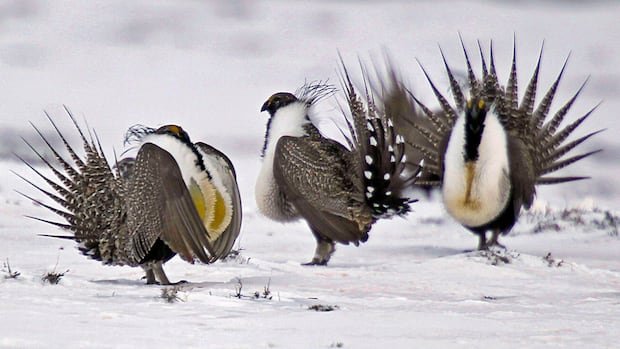

The Alberta government has recently eliminated habitat protections for the endangered greater sage grouse, a species facing critical endangerment in Canada. The amendments to the Public Lands Act in July resulted in the removal of safeguards for greater sage grouse in specified protection and recovery areas. Notably, a helium extraction company, Thor Resources, received a new approval for operations within the designated sage grouse habitat during the same period.
Designated as an endangered species by both Alberta and federal authorities, the greater sage grouse population in Alberta is alarmingly low, with estimates suggesting fewer than 100 birds remaining. The species has experienced a staggering 98% decline in Alberta from 1968 to 2012 primarily due to habitat loss and industrial activities, currently occupying only about seven percent of its historical range.
Professor Mark Boyce, an ecology expert at the University of Alberta extensively involved in greater sage grouse conservation, expressed grave concerns about the removal of provincial protections. Boyce warned that the elimination of these safeguards places the remaining Alberta sage grouse population at immediate risk of extinction, criticizing the government’s decision as neglectful and detrimental to conservation efforts.
In response to criticisms, Alberta Environment and Protected Areas communications director Andrew Livingstone stated that the changes were aimed at simplifying regulatory processes in sage grouse habitats and offering more flexibility to operators in southeastern Alberta. Livingstone underscored the province’s commitment to a sage grouse recovery program that seeks to strike a balance between conservation efforts and economic demands, emphasizing investments in recovery initiatives such as habitat restoration, predator management, and enhanced monitoring.
Joshua Killeen, the conservation science and program manager at the Canadian Parks and Wilderness Society’s southern Alberta chapter, raised concerns over the implications of lifting provincial habitat protections, highlighting the potential jeopardy to decades of conservation work. Without habitat protection, the survival prospects of the sage grouse are significantly diminished, putting the species at high risk of disappearance from Alberta and potentially from Canada.
While federal protections remain intact for a portion of Alberta’s greater sage grouse habitat, the removal of provincial regulations covering a broader habitat area has raised significant apprehension among conservationists. The decision to revoke these protections has sparked criticism, with environmental advocates stressing the importance of preserving critical habitats to ensure the survival of endangered species like the greater sage grouse.
On a related note, the helium industry’s influence in advocating for the removal of provincial protections has also come under scrutiny. Thor Resources, a prominent helium extraction company, defended its operations in the sage grouse habitat, indicating compliance with height restrictions and noise mitigation measures despite the regulatory changes. The company’s stance aligns with the industry’s push for a balance between environmental concerns, economic interests, and societal needs.
The ongoing debate over habitat protections for the greater sage grouse underscores the complex interplay between conservation efforts and economic development, reflecting broader challenges in safeguarding endangered species while addressing industrial demands. The fate of the sage grouse in Alberta remains uncertain, with stakeholders advocating for a strategic approach that preserves critical habitats and supports sustainable resource management practices to ensure the long-term survival of this vulnerable species.