
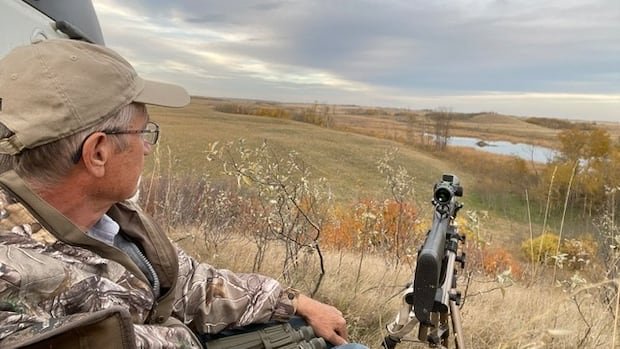

Ken Erickson, a long-time Saskatchewan hunter since 1971, decided to halt his pursuit of certain animals due to concerns over chronic wasting disease. With the discontinuation of a provincial testing program for the disease, other hunters are contemplating similar decisions.
The Saskatchewan government opted to end its chronic wasting disease testing initiative citing low participation from hunters. This disease impacts the brains and nervous systems of cervids like deer, elk, and moose. Erickson, emphasizing the importance of his family’s safety, refrained from taking any risks, especially as his wife is immunocompromised.
Despite having no reported cases of the disease affecting humans, Erickson, who hails from Thunder Bay, Ontario, expressed his reluctance to expose his household to potential risks. While his hunting activities now mainly focus on birds due to the challenges of handling large game alone with age, he expressed a desire to hunt deer again if the threat of chronic wasting disease was eliminated.
Criticism surfaced following the government’s decision, with Darrell Crabbe, the executive director of the Saskatchewan Wildlife Federation, highlighting the program’s significance for ensuring safe meat consumption within the hunting community. The government announced that environmental ministry staff would employ alternative methods to monitor wildlife health and population in the absence of the testing program.
Chronic wasting disease has been detected in 63 of Saskatchewan’s 83 wildlife zones, prompting mandatory testing in specific zones. However, samples from voluntary submission zones will no longer undergo testing. Despite some criticism regarding program logistics and delays in receiving results, the testing program played a crucial role in safeguarding hunters and their families.
The unexpected termination of the program drew backlash from experts like Ryan Brook, a professor at the University of Saskatchewan, who stressed the importance of maintaining and improving such initiatives rather than discontinuing them abruptly. Concerns were raised about potential consequences, including the disease’s spread and the financial impact on the hunting community.
Crabbe urged the government to reconsider its decision and proposed the establishment of a wildlife advisory committee for enhanced coordination in the future. Erickson echoed disappointment over the program’s discontinuation, emphasizing the need to address the issue effectively while expressing his desire to continue hunting in the region.