
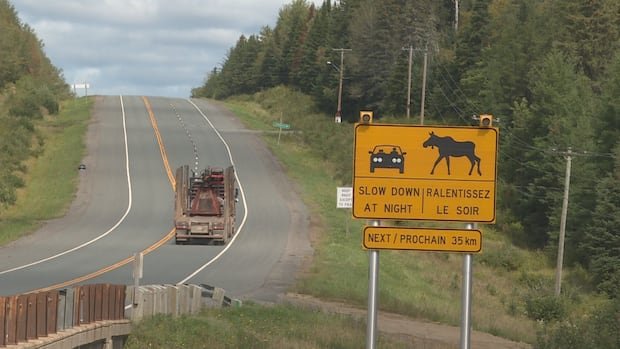

On a late August Saturday night, following an exhibition game against the Miramichi Timberwolves, the Chaleur Lightning hockey team was on their way back to Bathurst when their team bus encountered a moose on the highway, resulting in a collision. Fortunately, all team members and coaches escaped unharmed, except for the bus driver who sustained minor scratches.
The incident left a lasting impression on assistant coach Alex Ouellet and the team, reminding them of the potential dangers of large animal encounters on the road, especially during evening and nighttime travels. Coincidentally, the province had recently announced plans to install two new wildlife crossings on the same highway stretch where the collision occurred.
New Brunswick utilizes strategies such as wildlife fencing and tunnels to prevent animals like moose from straying onto roadways. These measures are strategically placed based on collision data to address high-risk areas. While extensive wildlife fencing lines both sides of 331 kilometers of highways in the province, the construction of wildlife crossings, including concrete tunnels, aims to facilitate safe animal passage without disrupting their natural behavior.
Transportation Minister Chuck Chiasson emphasized the importance of balancing wildlife conservation with road safety, acknowledging that complete prevention of animal collisions is challenging. The province has seen success with wildlife tunnels in the past, with various animals utilizing these passages, not just large mammals like moose.
Despite the implementation of wildlife crossings, collision rates have remained high in recent years. The province continues to explore additional measures to enhance road safety, including vegetation management to improve visibility. While Ouellet expressed hope for more fencing in the area, he acknowledged the limitations in completely preventing such incidents, emphasizing the importance of proactive safety measures in mitigating risks.