
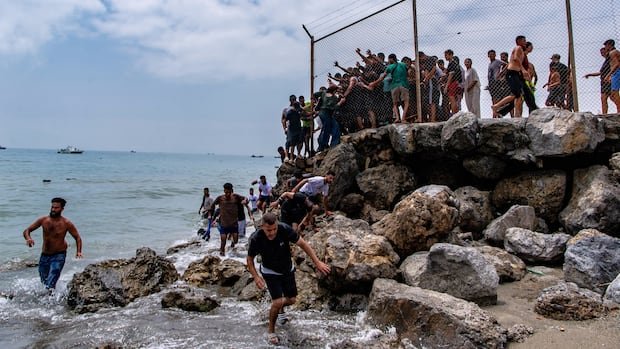

Spanish authorities are facing a crisis described as “absolute chaos,” “unsustainable,” and “a violation.” The breach of tens of thousands of migrants from Morocco into Spain’s Ceuta enclave by land and sea has resulted in the tragic deaths of at least 57 individuals, causing shockwaves and divisions across Europe.
Estimates suggest that around 60,000 people entered the Spanish enclave in North Africa on Thursday, with approximately 48,300 returning to Morocco by Friday evening. The migrants utilized various routes, including swimming five kilometers from the Moroccan town of Fnideq or attempting a shorter route from the nearby town of Belyounech.
Reports indicate that some of the migrants were children and unaccompanied minors, raising concerns about their safety during irregular migration journeys.
Ceuta and Melilla, both Spanish territories on the northern shores of the Mediterranean coast at the tip of Africa, are frequent targets for migrants seeking entry into Europe. The sudden surge on Thursday stands out as unprecedented in scale, with Ceuta witnessing a significant increase in population due to the influx of migrants.
The influx of migrants into Ceuta is driven by various factors, including economic opportunities and the desire to escape violence in their home countries. The territories are heavily fortified and serve as points of entry for migrants from Morocco and other African regions.
The surge in migrant crossings on Thursday has been linked to a recent ruling by the Spanish Supreme Court regarding the deportation of migrants arriving by sea. Spanish Prime Minister Pedro Sánchez attributed the surge to human smugglers, while activists in Morocco emphasized that most migrants were likely unaware of the legal decision.
The response to the crisis involved Spain deploying armed forces and additional police to restore order in Ceuta. Meanwhile, Moroccan security forces intervened to prevent more migrants from crossing into Ceuta and Melilla. Despite efforts to expel illegal entrants, some migrants faced challenges finding food and shelter in Ceuta, leading to a significant number returning to Morocco.
In the aftermath of the crisis, media reports indicate that migrants are still attempting to enter Ceuta, highlighting the complex and ongoing challenges faced by both migrants and authorities in the region.