
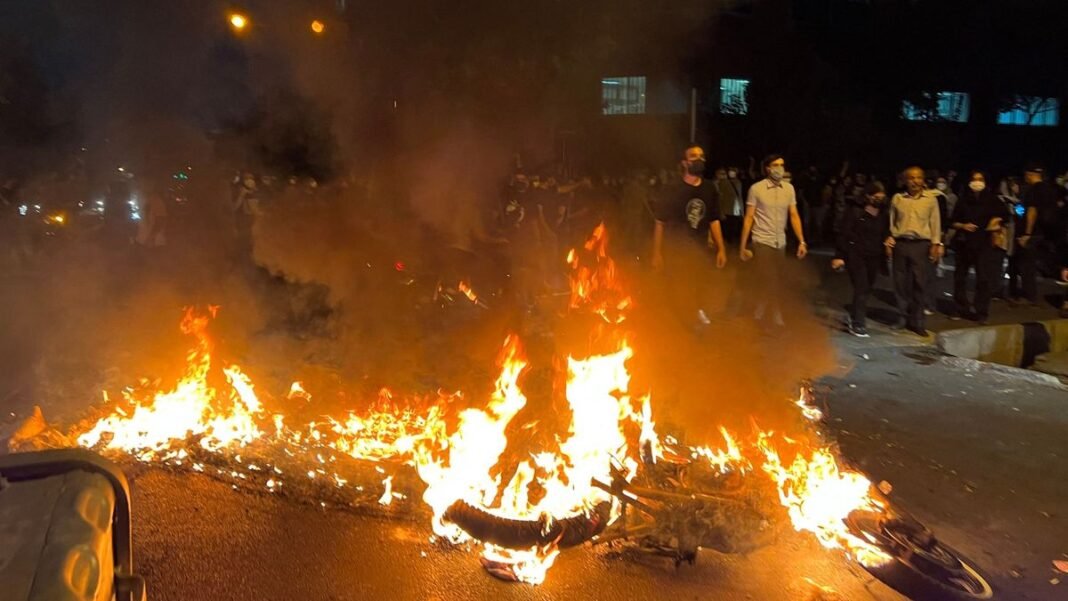

An urgent call has been made by experts for Britain and Western nations to distance themselves from Iran, enabling a potential popular and democratic uprising against the long-standing Mullah regime established in 1979. Leading Iranian dissidents are confident in a growing rebel movement comprising around 20,000 covert cells that aim to dismantle the rule of the Islamic Republic of Iran, particularly challenging the authority of the Revolutionary Guard Corps. Projections suggest a revolutionary wave may unfold in the coming months.
The rebel movement is expanding rapidly, with each clandestine cell reportedly accommodating over 10 members who are actively engaging in street protests against the current regime. Estimates indicate that the rebel units could consist of up to 100,000 individuals, potentially arming themselves if necessary. These cells operate independently, maintaining strict secrecy protocols and limited interaction with other groups. The involvement of dissidents, including those aligned with the People’s Muhajideen Organisation of Iran (MEK), is believed to have surged in recent times.
Despite facing severe repercussions, such as public executions and mass burials, dissidents are increasingly demonstrating their dissent on the streets, challenging the oppressive Ayatollah regime. Dr. Majid Sadeghpour, an Iranian expatriate residing in the United States and a prominent figure in the Organisation of Iranian American Communities, highlighted the regime’s escalating crackdown on its populace in response to mounting internal pressures.
The current Supreme Leader of Iran, Ayatollah Ali Khamenei, holds significant authority over state affairs, the military, and the judicial system, succeeding Ayatollah Khomeini in 1989. Over the years, the regime has intensified its grip on power through coercive measures, undermining basic rights and freedoms. Dr. Sadeghpour emphasized the organized and determined nature of the rebel movement, underscoring the regime’s brutal suppression tactics and its global notoriety for human rights abuses.
The international community, led by the United States and Britain, continues to pursue diplomatic avenues to compel Iran to alter its behavior despite its involvement in terrorism, nuclear proliferation, and regional conflicts. Dr. Sadeghpour dismissed the possibility of negotiating with the current regime, citing its entrenched violent and oppressive tendencies. He emphasized the urgent need for a transformative change in Iran’s governance structure to avert further humanitarian crises and global destabilization.
In light of escalating internal discontent and the growing strength of dissident groups, the prospect of an armed uprising against the regime looms large. Dr. Sadeghpour cautioned against underestimating the regime’s resilience but remained optimistic about the potential for a popular revolution to bring about lasting change in Iran. The challenges posed by the regime’s repressive policies and entrenched authoritarianism underscore the critical need for decisive international action to support the Iranian people’s aspirations for freedom and democracy.