
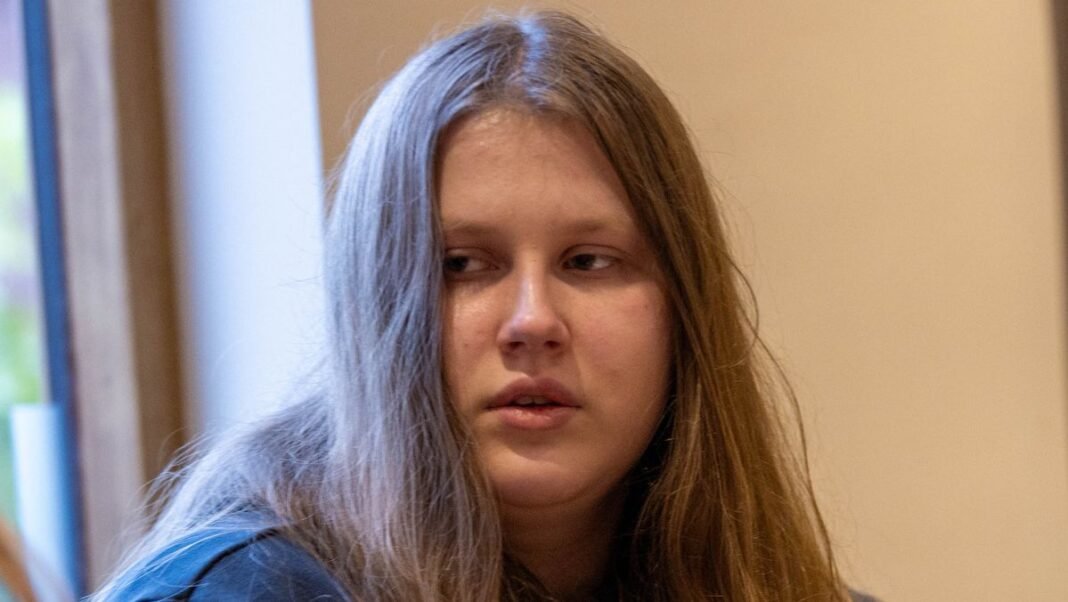

For years, Kate McCann held onto a heartbreaking desire – to hear her daughter Madeleine McCann address her as ‘mum’ once more. However, her enduring hope has now taken a disturbing turn due to a harassment ordeal.
Julia Wandelt, who was on trial alongside co-defendant Karen Spragg, has been convicted of harassing the family of the missing girl but acquitted of stalking them. Wandelt, a 24-year-old from Poland with eyes resembling Madeleine’s, asserted that she is the child who disappeared during a tragic family vacation to Praia da Luz, Lagos, Portugal, just before her fourth birthday. Despite her claims, DNA tests have confirmed no biological connection between Wandelt and the McCann family. She has a Polish family who vehemently deny her assertions.
Psychologist Dr. Bradley Powell suggests that Wandelt’s actions may stem from psychological needs rather than malice, possibly originating from identity confusion, trauma, and a distorted drive for validation.
Wandelt’s past, before these claims, is primarily known through her Instagram account, where she has faced extensive trolling. She has also shared details of a troubled childhood, including experiences of abuse and isolation, in an interview with BBC Radio 4.
Dr. Powell explains that false memories can be vivid and feel real to the individual experiencing them, often influenced by suggestion and emotional distress. Wandelt’s fixation on identifying as Madeleine McCann could be a result of such false memories and a need for validation.
The intense global attention on Madeleine’s case may have influenced Wandelt, according to psychology and culture scholar Joey Florez, who views her behavior as an example of fixation on high-profile missing persons cases. This fixation could be driven by a deep need for significance and attention.
Moving forward, psychotherapist Claire Law emphasizes the importance of compassion and professional guidance in supporting individuals like Wandelt, helping them address emotional needs and reconnect with a stable self-identity.
The impact of Wandelt’s actions on both the McCann family and herself underscores the need for understanding and psychological support to prevent further harm and promote healing in such complex cases.