
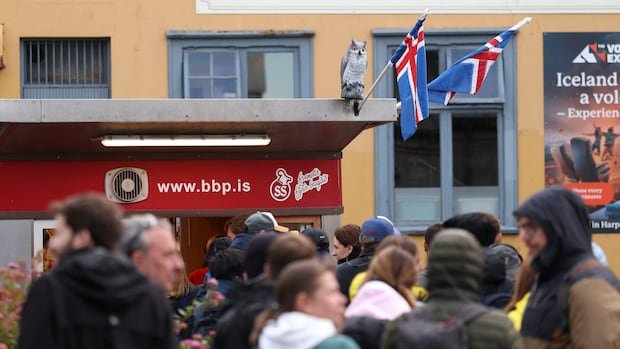

Icelandic citizens have voted against initiating European Union membership talks, according to the referendum results disclosed on Sunday. The rejection of the government’s proposal was largely influenced by concerns over the importance of Iceland’s fishing waters. Despite long-standing debates on EU accession, recent opinion polls indicated a shift in views, leading to 52.8% of votes against resuming negotiations with Brussels compared to 47.2% in favor. An impressive 82.5% voter turnout was recorded during the referendum, with only central Reykjavik showing majority support for membership talks, while rural areas and suburbs opposed it.
The government positioned EU membership as a safeguard against trade disputes and Arctic tensions, portraying the referendum as a decisive moment. Prime Minister Kristrun Frostadottir emphasized that a negative outcome would halt discussions as long as her coalition remained in power. The prospect of Iceland joining the EU garnered hope in Brussels for strengthening the bloc amid Arctic security concerns and skepticism towards enlargement. Additionally, discussions on potential security benefits from EU membership, especially in light of uncertainties surrounding US commitments to NATO, were part of the national discourse.
Fishing, a vital industry contributing significantly to Iceland’s economy, took center stage for many citizens. The sector constitutes 15% of the country’s GDP and around 40% of export earnings. Financial considerations also played a pivotal role, with concerns over high inflation and interest rates driving the debate. Advocates for EU accession argued that adopting the euro could potentially alleviate economic challenges, given Iceland’s relatively high central bank interest rate compared to the European Central Bank.
While some believed EU membership could address structural issues, opponents like Gudrun Hafsteinsdottir, the leader of the “no” campaign, argued that Iceland’s problems required domestic solutions. The issue of fishing quotas, crucial for Iceland’s economy, was a key point of contention. Icelandic officials assured that the country would maintain control over its waters under EU regulations, citing historical fishing rights. However, skeptics like Hafsteinsdottir expressed doubts about long-term EU commitments, highlighting concerns over potential concessions on fishing rights.