
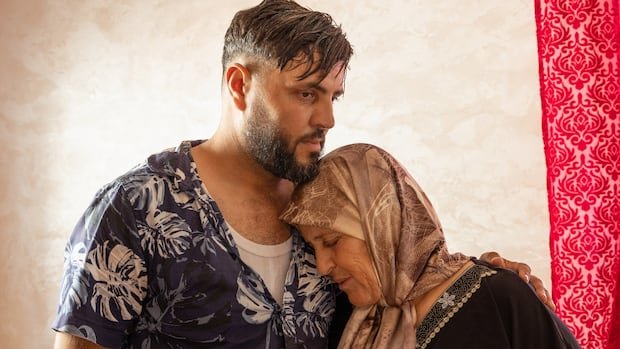

Jamila Afelom recounted how she identified her daughter, Fatin Ben Homar Azizi, solely by a necklace she had given her before she embarked on a perilous journey from Morocco to the Spanish enclave of Ceuta. Afelom discovered her daughter’s lifeless body at a hospital a day and a half after Fatin’s attempt to swim to Ceuta. In an emotional video call from Tétouan, Afelom vividly recalled the distressing events of that fateful day in late July.
Describing Fatin as bold, determined, and somewhat tomboyish, Afelom shared anecdotes about her daughter’s passion for soccer. Fatin’s soccer coach, Adel El Kaab, fondly remembered her as a younger sister and expressed his sorrow over her tragic end. Despite his efforts to caution players about the risks of irregular migration, several young women, including Fatin, sought a better future in Europe.
Afelom, a single mother working at a cemetery, painted a grim picture of their economic struggles in Tetouan. Fatin, driven by the desire to alleviate their poverty, had attempted to reach Ceuta previously. Tragically, during the mass migration attempts in July, Fatin lost her life in the pursuit of a brighter future.
The family’s relentless search led them to discover Fatin’s body after days of uncertainty. As per Moroccan human rights organization AMDH, numerous individuals have perished attempting the perilous journey to Ceuta. Fatin’s burial marked the end of a poignant chapter in the life of a young woman whose dreams of a better life were cut short.
In the wake of Fatin’s untimely demise, her family grapples with the harsh reality of her loss while fretting over the fate of her siblings who survived the journey to Ceuta. With thousands of minors still stranded in Ceuta, Afelom’s anguish is compounded by the uncertainty surrounding her loved ones. Despite the heart-wrenching tragedy, Fatin’s aspirations for a better life remain unfulfilled, leaving her family to mourn the promise of a future that will never be realized.