
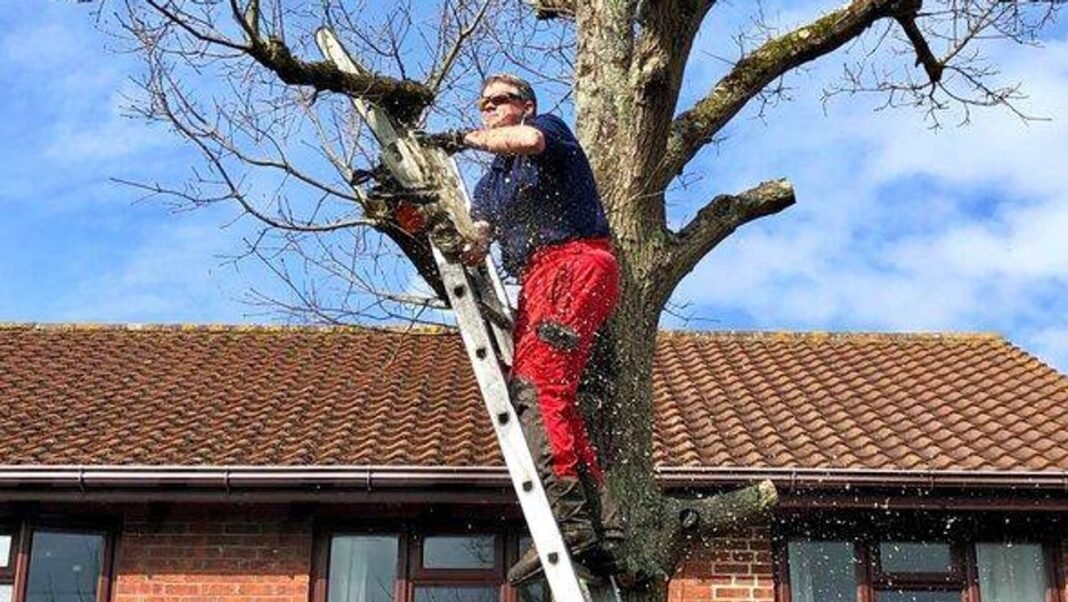

Maintaining good relationships with neighbors can sometimes be challenging. Many individuals may avoid addressing issues with neighbors or approach conflicts cautiously to prevent disagreements.
Whether you have a positive or strained relationship with your neighbors, certain problems like trees encroaching on your property or obstructing light can be hard to discuss. Legal experts, as per reports from the Express, advise understanding your legal rights before confronting your neighbors. In light of this, we consulted four legal professionals to determine potential actions to take if a tree blocks sunlight from your residence.
The experts unanimously agreed on a crucial point. According to Manjinder Kaur Atwal, a housing director at Duncan Lewis Solicitors, the law does not automatically grant you the right to natural light if a neighbor’s tree obstructs it. You typically have the ability to trim branches that hang over your property, but only up to your property line without causing harm to the tree.
Joanne Ellis, a dispute resolution specialist at Stephensons solicitors, clarified that current UK laws do not establish a general “right to light” concerning trees affecting your outdoor spaces. However, she pointed out an exception for interior areas. If natural light has entered a window uninterrupted for at least 20 years and its obstruction significantly impacts the room’s usability, you may have acquired a legal “right to light” under the Prescription Act 1832.
Joanne also highlighted the importance of reviewing property deeds, as they may contain specific rights or obligations related to light. She mentioned that deeds should be thoroughly examined for any explicit rights or obligations that could offer assistance.
Addressing hedge-related issues, Joanne mentioned that if a hedge, consisting of two or more tall evergreen or semi-evergreen trees or shrubs, exceeds two meters in height, action can be taken under the High Hedges provisions of the Anti-Social Behaviour Act 2003.
Experts at First4LandlordAdvice recommended practical steps, such as trimming branches or roots that encroach onto your property, with the cuttings offered back to your neighbor. They also highlighted that formal complaints can be made to the council under the Anti-social Behaviour Act 2003 for certain situations.
However, there are restrictions on what actions you can take. It is imperative not to cross boundaries, damage protected trees, or assume a general right to light gives you the authority to remove trees without specific circumstances. It is crucial to handle such matters sensitively and seek professional legal advice if needed.
Chris Taylor from Chris Taylor Gardening emphasized that if a tree on your neighbor’s land blocks light into your property, you have the right to trim back the overhanging branches only up to the property line. Trespassing or excessive pruning should be avoided, and any trimmed branches must be returned to the neighbor’s property.
Dave Sayce, co-founder of Compare My Move, noted that neighbors are not obligated to trim their trees unless they pose a danger or nuisance. Before taking any action, it is advisable to communicate with your neighbor to prevent escalating tensions. Legal disputes related to light loss can be intricate, and resolving issues amicably is often preferred.
In conclusion, open communication, understanding legal rights, and seeking professional advice when necessary can help navigate disputes related to tree obstruction and light loss between neighbors.