
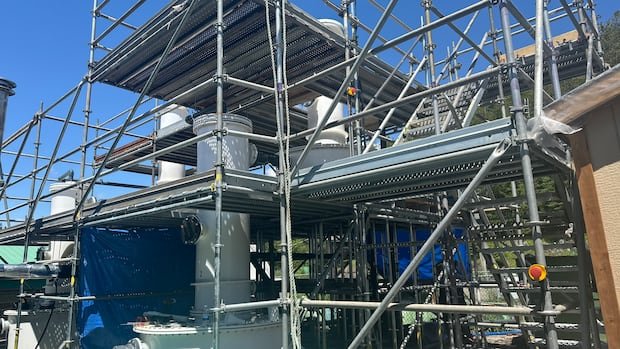

A startup in Nova Scotia is experimenting with a technique to capture and store more carbon in the ocean. The company is utilizing a new pilot facility to demonstrate the concept. The ocean naturally absorbs a significant amount of carbon dioxide, accounting for around 30% of all human-induced carbon emissions since the 1980s.
pHathom, the company behind the initiative, aims to enhance this natural process by capturing carbon dioxide from the atmosphere and transforming it into a form suitable for long-term storage in the ocean. The testing of their method will occur at the Huntsman Marine Science Centre in St. Andrews, N.B.
Kimberly Gilbert, the co-founder and CEO, emphasized the importance of proving the safety and effectiveness of their approach at a local level first, given the global issue of climate change. Their method involves replicating a natural process where raindrops absorb carbon dioxide, become slightly acidic, and interact with alkaline rocks like limestone to convert the carbon dioxide into bicarbonate.
In a controlled setting, pHathom’s method involves exposing seawater to the emissions of a biomass power plant to make it more acidic. The water is then mixed with limestone particles in a tank, converting the carbon dioxide into bicarbonate before being reintroduced into the ocean with the same pH level as regular seawater.
Other companies in Nova Scotia are also exploring variations of carbon removal techniques, such as alkalinity enhancement. pHathom’s method stands out for its use of concentrated carbon dioxide, enhancing efficiency with measurable environmental impacts.
During the pilot phase, the company aims to capture 0.1 tonnes of carbon dioxide daily and observe its effects on marine species over a three-month period. If successful, pHathom plans to expand their operations with a second test site in Nova Scotia next year.
Scaling up carbon removal technologies remains a significant challenge, as highlighted by experts in the field. The necessity for transitioning away from fossil fuels while exploring innovative carbon removal methods is crucial to addressing the climate crisis effectively.
Canada has been recognized as a leader in ocean alkalinity enhancement research, with calls for international collaboration and regulatory frameworks. Despite uncertainties in the market due to policy changes, companies like pHathom remain optimistic about the potential for their technology to contribute to global climate action when the time is right.