

Rescue teams in Nepal are in a race against time to reach numerous workers potentially trapped inside hydropower tunnels in the mountainous region. This effort represents a critical opportunity to locate survivors following a devastating Himalayan flood that claimed over 1,200 lives.
The flood, triggered by a glacier collapse near the Nepal-China border, wrought havoc across towns and valleys in the area. Official reports confirm 1,204 fatalities with over 4,200 individuals still unaccounted for. The focus of rescue operations has shifted towards hydroelectric project tunnels where authorities suspect workers may have survived despite being isolated by floodwaters and debris.
Certain tunnels are equipped with air pockets, giving hope for the approximately 900 missing workers. Amshu Kiran Shahi, a Nepal Electricity Authority board member, expressed confidence in the presence of survivors due to the provision of food and water within the structures.
While the chances of finding survivors elsewhere diminish, rescue missions persist as teams scour the mountainous terrain near the China border where the floods wreaked havoc. Prime Minister Balendra Shah emphasized the continuation of search and rescue efforts to locate missing individuals and aid those affected by the disaster.
Specialized rescue teams from India, China, and the United States are actively involved in the tunnel rescue operations. These operations are particularly focused on tunnels at four projects, with the Trishuli-3A project offering high hopes of survival due to the presence of air circulation.
In Tibet, China, the official toll has risen to at least 21 dead and 541 missing. Beijing has reopened the road to the Gyirong border crossing, facilitating access for heavy machinery to the disaster zone for the first time.
Chinese state broadcaster CCTV showcased the deployment of excavators, search dogs, and life-detection equipment in a narrow mountain gorge where rescue operations are underway. The search is concentrated on key structures as officials conduct a thorough exploration for survivors.
China’s list of missing individuals includes Nepali citizens, Indians, and Latvians, with additional support, including DNA identification experts and emergency supplies, being dispatched to Nepal to aid relief efforts.
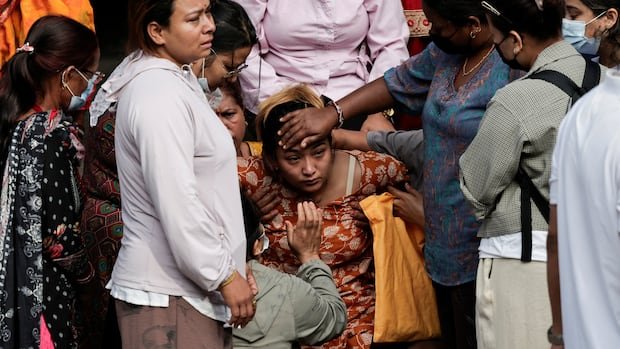
Residents in the affected areas of Nepal are grappling with the aftermath, salvaging what remains of their belongings amidst the destruction. Children in certain regions are exhibiting signs of psychological distress after witnessing the catastrophic flood, prompting organizations like Save the Children to offer support.
Efforts are underway to restore power supply, telecommunication, and transport links in Nepal with the assistance of foreign aid. Despite the challenges posed by the disaster, the government is working diligently to address the crisis and provide relief to those affected.