
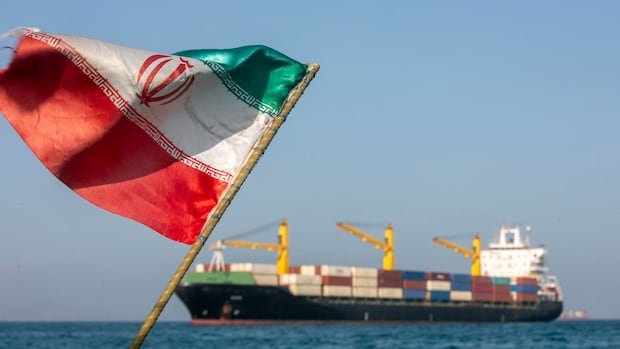

U.S. military forces conducted a strike on Iranian rocket launchers in the Strait of Hormuz, marking the first military engagement in over a month. This action disrupted a period of relative calm in the ongoing conflict that has extended for more than six months. Intelligence indicated that Iran’s Islamic Revolutionary Guard Corps (IRGC) was preparing to deploy rockets equipped with sea mines into the strait. Recently, the U.S. military had cleared sea mines from the international shipping routes in the strait.
Reports from semi-official news outlets in Iran described hearing explosions near Larak Island in the strait. Following the U.S. strikes, Iranian state television broadcast footage purporting to show ballistic missiles being launched at U.S. bases in Jordan. Jordan’s armed forces intercepted eight missiles that breached the country’s airspace in the early hours of Monday.
Contrary to Iran’s assertion of aggression, U.S. military officials characterized the strikes as a “limited, precise action” targeting suspected minelaying activities. The U.S. Central Command stated that the military intervention aimed to safeguard civilian mariners, commercial shipping, and global trade from potential threats.
Any escalation of hostilities could pose significant risks for the region, particularly as Iran has previously targeted U.S. military installations and infrastructure in Gulf countries since the conflict began in February. The last confirmed U.S. military operation against Iran occurred on July 29, involving strikes on multiple Revolutionary Guard targets. President Donald Trump later decided to postpone additional strikes at the request of Gulf allies.
The recent military action follows the Trump administration’s shift towards imposing economic sanctions as a primary tool to pressure Iran, signaling a departure from relying solely on military measures to resolve the conflict. Concerns have been raised about dwindling munitions stockpiles and the potential strain on U.S. military readiness due to the prolonged engagement.
While President Trump previously expressed a desire for swift resolution, he now appears less hurried to resume negotiations with Iran. He has underscored the impact of the campaign on Iran’s military capabilities, emphasizing significant damage inflicted on the country’s navy and air force. Despite these claims, Iran has maintained leverage through its strategic control of the vital Strait of Hormuz, limiting the flow of vessels carrying essential resources.
Efforts to normalize traffic in the strait have faced challenges, with commercial activity still below pre-war levels. Recent incidents, including an unclaimed projectile striking a tanker ship near Oman, highlight the persistent risks in the region. The situation underscores the complex dynamics at play in the Strait of Hormuz, a critical waterway for global trade and energy transportation.