
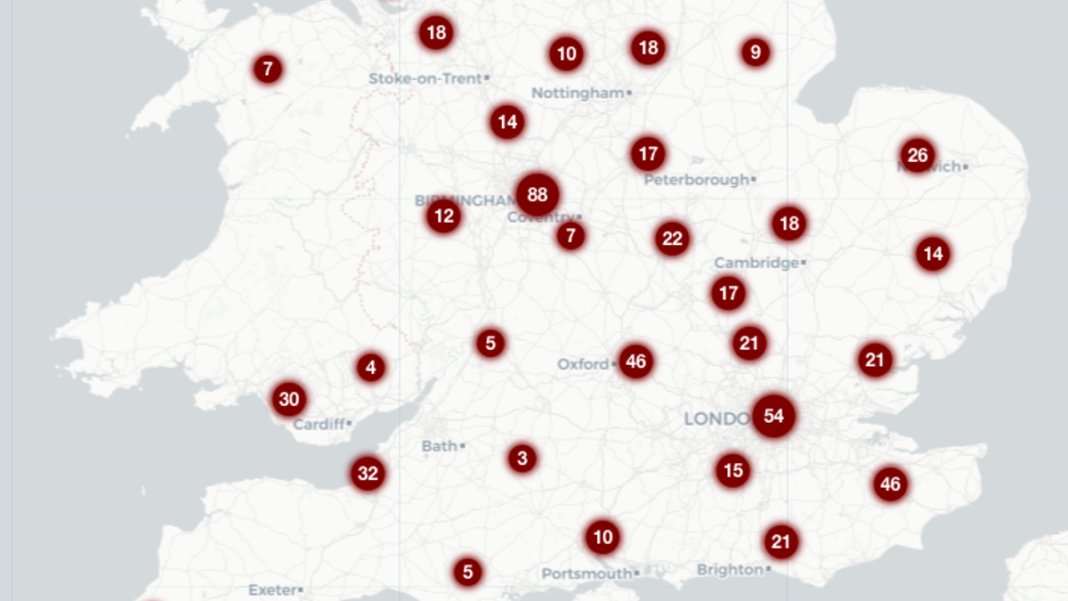

A new ‘murder map’ of 1,000 unsolved cases in the UK may have identified a previously undetected serial killer. The map reveals two women were strangled in Cardiff in 1943, in crimes strikingly similar and occurring just weeks apart. Despite the wartime blackouts hindering investigations, no connection between the murders was made at the time, leaving both cases unresolved.
Criminologist Professor David Wilson suggests that once a predator begins a violent pattern, they are likely to continue until apprehended. However, the wartime conditions that allowed the killer to evade capture may have inadvertently halted further attacks, preventing the classification of a serial killer.
The first victim, Mabel Harper, was brutally murdered in August 1943 while walking home in the dark. Subsequently, Alice Pitman suffered a similar fate three months later, their deaths sharing chilling similarities. Although a suspect, David Emlyn Davies, was briefly arrested for Alice’s murder, he was later acquitted, and the link to Mabel’s case was overlooked.
The lack of resources and experienced officers during wartime may have impacted the investigation’s thoroughness, potentially allowing the killer to escape justice. Professor Wilson highlights the disruption of societal norms during wartime, which could have emboldened a murderer to commit such heinous acts.
While the cases of Mabel and Alice remain unsolved, the South Wales Police continue to review historic murder cases, including these cold cases. The revelation of a potential Cardiff blackout strangler adds another layer of complexity to the unsolved mysteries surrounding wartime killings in the region.
For those interested in exploring more unsolved murder cases, a comprehensive database, including detailed features on specific incidents, is now available in the publication “Britain’s 1,000 Unsolved Murders Volume II: Midnight Stalkers.” The interactive online map offers further insights into these enigmatic cases, shedding light on the enduring quest for justice and closure by the victims’ families.