
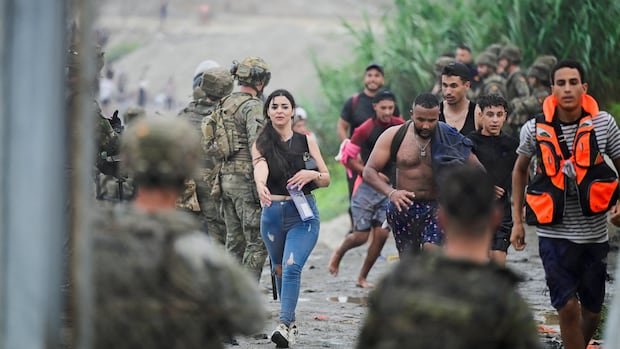

Spain and Morocco bolstered the border barrier of a Spanish territory on Friday, effectively stemming the influx of migrants after tens of thousands arrived by both land and sea. The leader of the Spanish enclave in North Africa, Juan Jesus Vivas, reported that around 60,000 individuals had entered Ceuta in recent days, resulting in the tragic loss of at least 57 lives.
By 6 p.m. local time on Friday, approximately 48,300 migrants had voluntarily returned to Morocco, as confirmed by Spain’s Interior Ministry. The sudden surge of migrants into Ceuta, a small Spanish-held peninsula adjacent to Morocco, sparked concerns and discord in Europe. France announced heightened border checks with Spain, while Italy threatened to suspend Spain from the European Union’s internal open border system.
Moroccan authorities deployed water cannon trucks and used force to repel migrants at the Ceuta gates, resorting to batons and tear gas to prevent further border breaches. Spanish officials vowed to expedite the expulsion of those who entered unlawfully, despite legal constraints following a court ruling on special “border rejection” regulations allowing immediate expulsions.
Spanish Prime Minister Pedro Sanchez denounced the mass crossings as a violation of Spain’s territorial integrity and urged Morocco to intensify efforts to curb the flow of migrants. Ceuta and Melilla, another Spanish autonomous city in northern Morocco, serve as the European Union’s sole land borders with Africa and often witness surges of migrant attempts to reach Europe.
Various factors, including a recent ruling by Spain’s Supreme Court restricting the summary return of migrants intercepted at sea, may have contributed to the unprecedented influx. Migrants typically swim from Moroccan towns like Fnideq to reach Ceuta, covering a distance of approximately five kilometers, while others attempt the crossing from nearby areas.
Despite reinforced security measures on the Moroccan side, some migrants managed to infiltrate border areas seeking alternate routes. The issue of migration remains contentious across Europe, with right-wing parties gaining momentum since the 2015 crisis that saw over a million asylum seekers traversing the continent.
European nations are ramping up border security in response to the situation, with increased police presence and surveillance measures. Discussions surrounding the suspension of the Schengen Area with Spain have emerged, reflecting concerns about border control and immigration policies within the EU.
As the situation unfolds, leaders across Europe and the U.S. have expressed varying opinions on the migrant influx, highlighting the complex and divisive nature of the issue. While emphasizing the need to address illegal crossings, Spain’s government underscores the economic contributions of immigrants and has implemented initiatives to integrate migrants into society.
Tensions between European countries have escalated, with differing views on immigration policies and the handling of migrant flows. The situation in Ceuta underscores the challenges and complexities associated with migration management and border security in the region.