
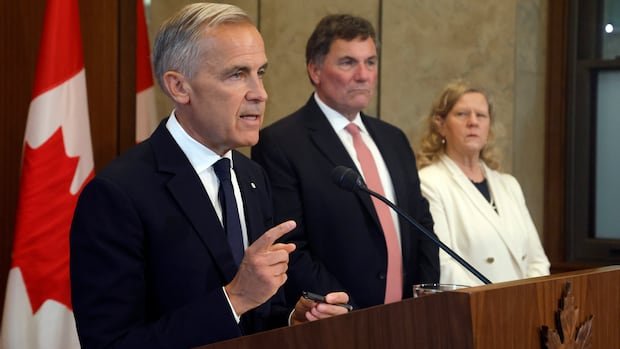

After enduring a week filled with tensions and drama, Prime Minister Mark Carney stepped forward on Saturday morning to clarify the reasons for rejecting what he referred to as a “poor deal” and to shed light on the future course of action.
Carney stated that Canada had engaged in a year-long negotiation with the United States in a sincere and dedicated manner to establish a new, extensive trade agreement. Despite Canada’s pragmatism, patience, and perseverance, last-minute alterations proposed by the American negotiators were deemed unjust, economically unsound, and raised doubts about the trustworthiness of any potential deal, as per Carney’s statement released just moments before midnight on Friday.
Shortly before the announcement, U.S. Trade Representative Jamieson Greer informed journalists during a conference call that Canada had opted not to finalize the agreement, leading to speculation on how Carney would persuade Canadians to accept the terms of the deal amid their reluctance to settle for anything less than complete surrender from the U.S.
Concerns were raised by Canada’s former chief negotiator, Steve Verheul, who feared that Canada had made excessive concessions. Additionally, former Foreign Affairs Minister Chrystia Freeland expressed worries that any implicit agreement to U.S. tariffs could place Canada in a difficult position.
The imposition of new tariffs by President Trump is anticipated to have significant repercussions, with economist Trevor Tombe estimating potential job losses for up to 90,000 Canadians. Canadian negotiator Janice Charette cautioned her American counterparts that the introduction of new tariffs could serve as a stumbling block in negotiations, potentially complicating the process further.
The future of the trade relationship between Canada and the U.S. remains uncertain, with both sides seemingly at a stalemate. The prevailing sentiment suggests that navigating this situation will not be smooth sailing.
In a recent interview with the New York Times, a senior official in the Trump administration emphasized that the U.S. can no longer be taken for granted in international relations. The official highlighted the need to reassess the value of partnerships and relationships with the U.S. in various aspects, including trade and defense.
Analysts have likened the current trade scenario between Canada and the U.S. to a game of chicken, suggesting a precarious and tense situation. The prevailing uncertainty emphasizes the challenging road ahead.
Prime Minister Carney acknowledged on Saturday that the U.S. has undergone significant changes, leading to a transformation in its commercial relationships. Despite efforts to reach a fair deal, the cumulative impact of U.S. demands revealed limitations in the American government’s commitment to a genuine economic partnership.
The aftermath of the collapsed negotiations raises questions about the future trajectory of Canada-U.S. relations. The implementation of American tariffs on Canadian goods underscores the need for strategic planning and support for affected industries. The possibility of retaliatory measures and the prospects for resuming negotiations remain uncertain.
While the adage “no deal is better than a bad deal” rings true, navigating the complexities of no agreement poses its own set of challenges. The path forward is fraught with uncertainties and complexities that both nations must address in the days ahead.