
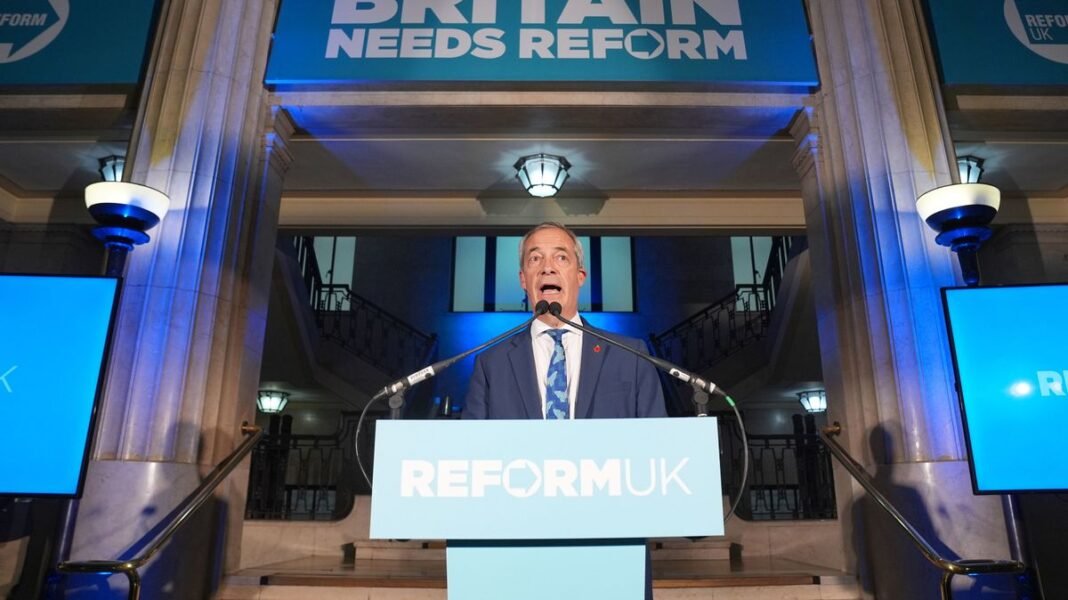

Nigel Farage predicts a potential financial crisis leading to a general election in 2027. The Reform party leader is striving to gain trust regarding his ability to manage the country’s finances. While acknowledging the impracticality of significant tax reductions, Farage remains steadfast in his proposal to introduce a “golden opportunity for billionaires” if he assumes the role of Prime Minister.
His economic strategies have faced criticism from the Institute for Fiscal Studies, with experts questioning the feasibility of Reform’s manifesto figures. Farage is poised to defend the decision to exit the EU, countering Rachel Reeves’ accusations linking Brexit to the nation’s economic challenges.
Farage refrains from disclosing his choice for Chancellor but concedes that the party is not yet prepared to reveal key appointees. Emphasizing the need for realistic fiscal measures, he outlines plans to eliminate inheritance tax for family farms and businesses and raise tax thresholds to alleviate financial burdens on low-income earners.
Addressing misconceptions about Reform’s welfare stance, Farage clarifies the party’s position on benefits, focusing on supporting working couples and easing childcare expenses. Despite facing opposition, he remains committed to his controversial proposal of offering “non-dom” tax status to foreign billionaires for a fixed fee, defending it as a strategy to retain high-earning individuals in the UK tax system.
Farage highlights the significance of the financial services sector as the nation’s largest industry, expressing concerns about regulatory hindrances impacting businesses. He laments the missed opportunities post-Brexit and criticizes the escalating regulatory environment hindering economic growth.
Foreseeing economic turbulence triggering a future general election, Farage anticipates a shift towards austerity measures, contrasting with Labour’s economic agenda. His remarks on taxation, migration’s impact on the economy, and regulatory challenges underscore his vision for Reform UK’s economic policies.
As Farage revises his tax reduction pledges in response to public backlash, the Institute for Fiscal Studies’ skepticism remains. Expectations are high for his upcoming speech in London, where he is anticipated to address concerns over the feasibility of Reform’s economic proposals, defend Brexit, and outline potential business regulation reforms.