
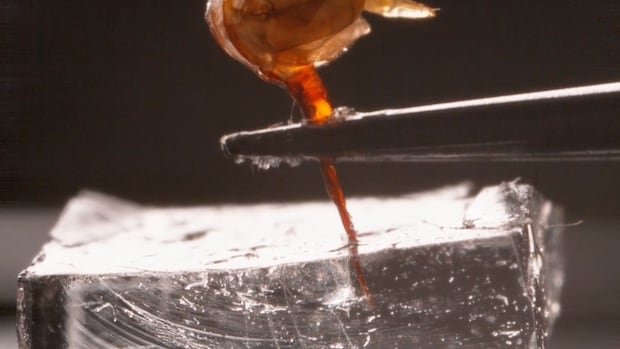

Recent research from the Proceedings of the National Academy of Sciences has shed light on the effectiveness of the stinger of a western honey bee (Apis mellifera). The stinger is a last-resort defense mechanism that injects venom into the target, often leading to the bee’s demise. Lead author Fiorella Ramirez Esquivel, a postdoctoral researcher at Macquarie University, emphasized the novelty of capturing the bee stinger in action using modern high-speed cameras.
To study the process, the researchers filmed the bee stingers in action at hundreds of frames per second. By exploiting the translucence of the venom sac and stinger, they were able to illuminate the intricate structures within. The experiments involved live honey bees, where the stingers were removed and the bees were promptly euthanized due to the stinger’s short active period once separated from the bee’s body.
The study revealed a sophisticated “double piston design” in the stinger, where specialized valves work in tandem to drive the stinger deeper while continuously pumping venom. This mechanism, likened to a complex car engine, involves precise movements of the valves to ensure a continuous flow of venom. The researchers employed 3D printing to recreate and study these movements further.
The stinging behavior of honey bees, particularly the western honey bee, serves a crucial role in protecting their colony, functioning as a “superorganism.” The stinger’s autotomy, leaving part of the body behind, is a sacrifice that benefits the larger colony’s defense. The study also highlighted the role of pheromones released by the stinger in recruiting other bees for defense.
Despite its evolutionary significance, the defense mechanism of honey bee stingers may not always be effective against tougher targets. The study’s findings could have potential medical applications, as the continuous and controlled venom delivery mechanism could inspire new technologies. This research prompts further inquiry into the unique adaptations of different bee species in producing honey and defending their colonies.