
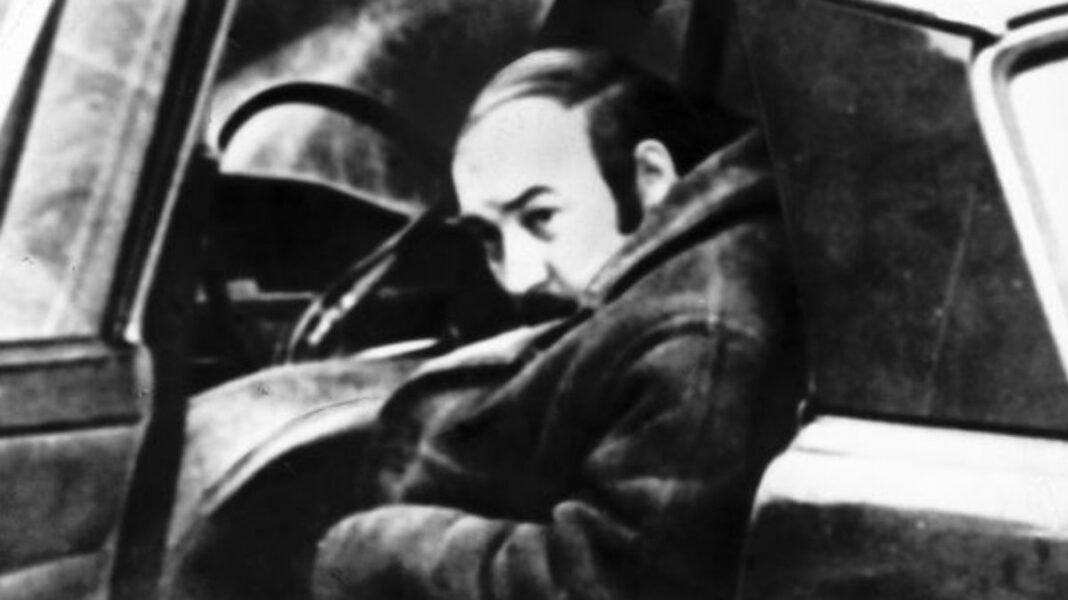

In the historic Court Two at the Old Bailey, a distinct moment unfolded following the testimony of the distinctive balding armed robber characterized by a walrus mustache and comb-over. As Derek “Bertie” Smalls concluded his testimony, the seven defendants in the dock engaged in an unexpected musical interlude, singing the blues tune “Whispering Grass,” with poignant lyrics alluding to secrecy and future encounters. This performance, featuring gun gestures and a rendition of “We’ll Meet Again,” symbolized a clear message to Smalls. Once a renowned figure in London’s criminal elite, Smalls had broken the unspoken code of silence among criminals by becoming the first supergrass, testifying against his former criminal associates.
Smalls’ journey to becoming an informant began after his arrest in connection with a bank robbery in Wembley in August 1972. Striking a deal with the Director of Public Prosecutions at the time, Smalls received complete immunity from prosecution in exchange for his cooperation. Over the course of six months of trials at the Old Bailey, Smalls’ testimony led to the incarceration of 28 individuals, totaling 414 years in prison. Despite admitting to his involvement in numerous robberies, Smalls was shielded from prosecution as part of the agreement.
Described as a formidable asset by Chief Supt Jack Slipper, the detective responsible for apprehending notorious train robber Ronnie Biggs, Smalls became a marked figure within the criminal underworld, with a substantial bounty on his head. One of the individuals convicted based on Smalls’ testimony was Mickey “The Pimpernel” Green, who transitioned from bank robberies to drug smuggling following his incarceration and went on to accumulate significant wealth before facing legal action across various countries.
The use of informants, or supergrasses, has a long history in criminal investigations, dating back to ancient times. However, Smalls’ case marked a significant shift in the approach to utilizing informants in the UK. Subsequent cases, such as that of Maurice O’Mahoney, further highlighted the impact of informants in criminal prosecutions. The ripple effect of Smalls’ actions extended to other high-profile cases, including the downfall of masterminds like Brian Reader in the Hatton Garden heist.
Despite living a relatively peaceful life for several decades, Smalls’ past caught up with him when he encountered a former member of the Wembley Mob he had helped imprison. The encounter, devoid of retaliation, served as a poignant reminder of Smalls’ legacy as a supergrass. Ultimately, in 2008, Smalls passed away at the age of 72 in his residence in Croydon, closing a chapter on a complex and impactful journey through the criminal justice system.