

A rare discovery of a vast undersea nursery housing billions of baby sea cucumbers near Sanikiluaq, Nunavut, is shedding light on the species and potentially paving the way for economic opportunities for the Arctic community. Lucassie Arragutainaq, manager of the Sanikiluaq Hunters and Trappers Association, mentioned that while the community consumes small, young sea cucumbers regularly, the larger adult sea cucumbers could be exported to markets in China and Japan.
In a bid to explore the inclusion of sea cucumbers in plans for a commercial scallop fishery, scientists from Memorial University in Newfoundland were invited by the association to study Cucumaria frondosa, commonly known as the Orange-footed sea cucumber, back in 2018. Led by Annie Mercier, a professor in the university’s ocean sciences department, the team, with the guidance of local residents, uncovered the nursery the following year, to the surprise of the Sanikiluaq community.
The discovery was met with excitement by Mercier, who highlighted the elusiveness of sea cucumbers, stating that there are approximately 1,800 species globally, with their nursery grounds remaining largely unexplored due to their cryptic nature. Mercier and her team detailed their findings in a 2023 article published in the peer-reviewed journal Polar Science, marking the first-ever identification of a Cucumaria frondosa nursery.
The baby sea cucumbers, measuring less than two millimeters, were described as tiny pink specks on rocks and mussel shells near the surface, contrasting with the adults found deeper underwater. The expansive nursery, estimated to extend along the Belcher Islands archipelago coastline at a depth of one to three meters, has opened up new avenues for research and conservation efforts.
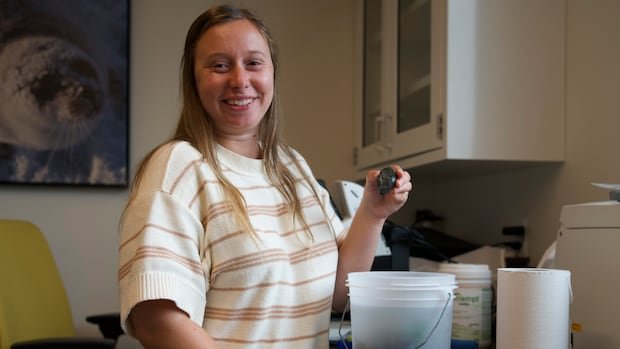
Researchers like Joséphine Pierrat, a postdoctoral researcher from Memorial’s ocean sciences department, highlighted the abundance of baby sea cucumbers during a recent study trip to Sanikiluaq. The team, based at the Qikitait Centre, collaborated with the local community to collect and analyze samples, essential for data-driven decision-making regarding the potential commercial exploitation of sea cucumbers.
The Sanikiluaq community, spearheaded by Arragutainaq, is considering integrating sea cucumbers into their existing scallop fishery plans, recognizing the economic and employment prospects such ventures could offer. While the process is expected to be lengthy due to regulatory considerations, the cautious approach is deemed necessary to ensure sustainable management practices, as highlighted by Mercier.
Arragutainaq emphasized the potential benefits a sea cucumber fishery could bring to the community, emphasizing the need for learning and adaptation to this new opportunity. Pierrat also pointed out the dual market potential, where adult sea cucumbers could be processed for export while younger ones could be locally consumed, offering a versatile food source for the region.
Overall, the discovery of the sea cucumber nursery near Sanikiluaq has sparked optimism and interest in leveraging this newfound resource for economic development and conservation initiatives within the Arctic community.