
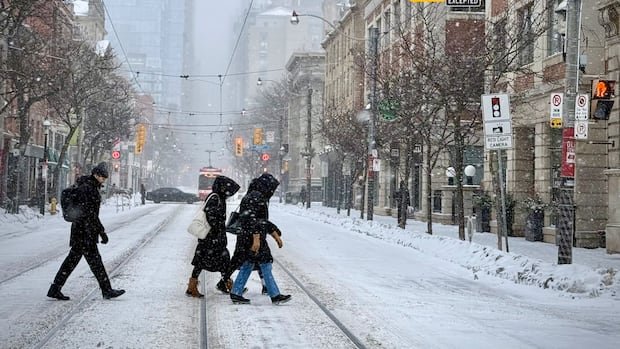

Waymo has announced its entry into Toronto, but the challenges of navigating a snow-covered terrain will require time and extensive training data to address, according to experts. The U.S.-based company revealed its plans to commence street testing in Canada’s largest city with human drivers at the helm in the upcoming days for mapping and safety validation purposes. Waymo aims to make its driverless cabs available for hailing by passengers in Toronto by 2028.
The testing will span all hours and days of the week to ensure the technology can adapt to Toronto’s unique driving conditions, particularly the winter weather, as highlighted by Steven Waslander, a professor at the University of Toronto’s Robotics Institute. Unlike Waymo’s operations in warmer cities like Los Angeles and Phoenix, Toronto’s winter conditions present a new challenge that the company has yet to commercialize.
Autonomous vehicles rely on various sensors like cameras, radar, and lidar systems to navigate their surroundings, but adverse weather conditions such as snow can hinder their efficacy. Snow and ice accumulation on sensors can obstruct their functionality, impacting the system’s ability to detect objects accurately. Furthermore, the behavior of other drivers in inclement weather poses additional challenges for autonomous vehicles.
To adapt to these conditions, Waymo is incorporating engineering solutions and accumulating more data from driving in poor weather to enhance its system. The company has been conducting tests in snowy regions such as upstate New York and Michigan, along with cities like Denver, Minneapolis, and Detroit. By gathering data from diverse weather conditions, Waymo aims to improve its system’s performance in adverse weather.
Waymo employs various strategies like heaters and windshield wipers to maintain sensor visibility and acts as mobile weather stations to collect real-time weather data. While Waymo continues to enhance its technology for winter conditions, it has not yet validated its driver for operation in snowy environments. However, the company plans to launch its ride-hailing service in Toronto by 2028, allowing ample time for resolving winter-related challenges.