
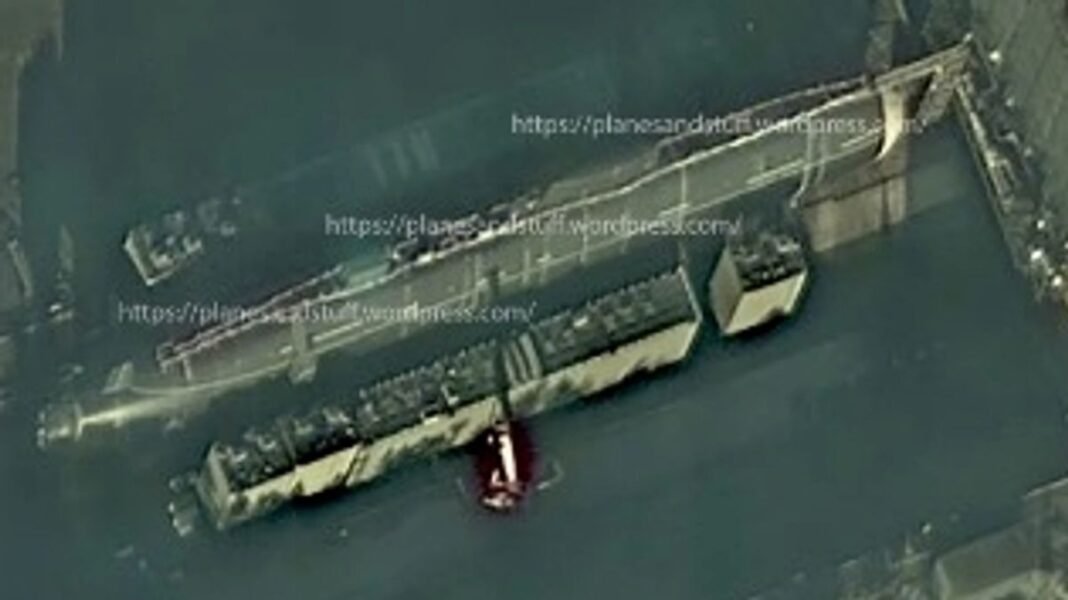

New satellite images have revealed the impressive size of Russia’s latest nuclear-powered submarine, equipped to launch powerful nuclear torpedoes. The Khabarovsk-class submarine, a new addition to Moscow’s nuclear arsenal, was captured in full size at the Sevmash shipyard workshop. This submarine, part of Project 09851, is approximately 135-140 meters long and 13.5 meters wide, designed to deploy Russia’s advanced ‘Poseidon’ torpedoes capable of causing devastating tsunamis and with an operational range spanning continents.
Described as a “nuclear-powered missile cruiser” by the Russian Ministry of Defence, the Khabarovsk submarine is a highly secretive project. While it won’t carry ballistic missiles, it will be armed primarily with Poseidon torpedoes, complemented by other types of missiles. The submarine’s launch in Severodvinsk was delayed by five years due to unexplained setbacks, according to Defence Minister Andrei Belousov, who emphasized its crucial role in safeguarding Russia’s maritime borders.
Powered by a nuclear engine, the submarine can submerge to depths of around 500 meters and operate at sea for extended periods. Its construction costs, estimated to exceed £1 billion, have been shrouded in secrecy, indicating experimental design elements and a cautious approach to Western scrutiny. A second submarine of the same class, the Ulyanovsk, is already in production to bolster Russia’s naval capabilities, particularly in deploying the Poseidon system for global strategic influence.
Scheduled for sea trials before joining Russia’s nuclear fleet, the Khabarovsk submarine features the Poseidon system, also known as Kanyon, challenging traditional nuclear warfare conventions. Russian President Putin recently announced successful underwater tests of the Poseidon missile, highlighting its potency compared to existing intercontinental missiles. Putin framed the Poseidon system as a countermeasure to US missile defense initiatives following policy shifts in the early 2000s, signaling a strategic response to evolving geopolitical dynamics.